

B2B Thought Leadership Has a Distribution Problem. Better Strategy and Campaign Thinking Can Help Fix It.
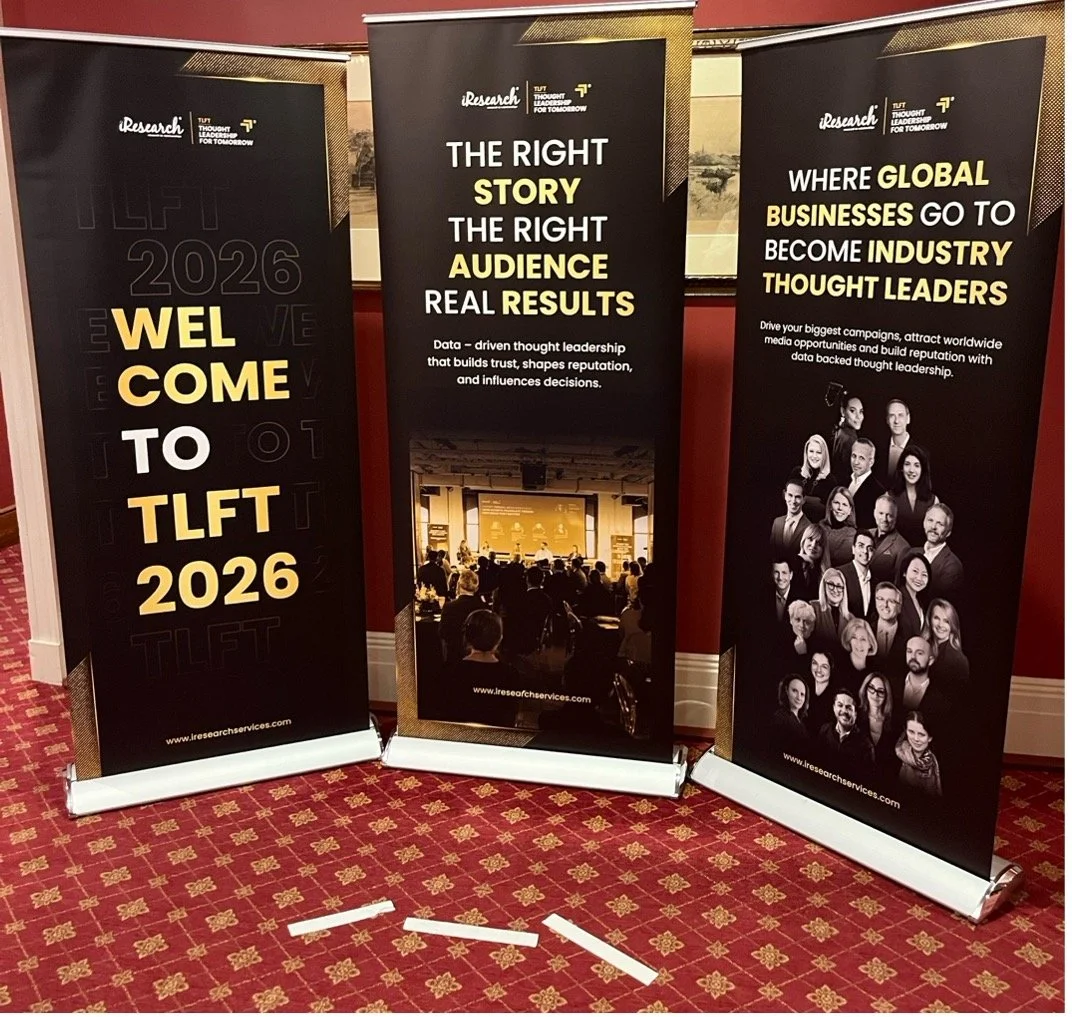
Thought Leadership for Tomorrow 2026, a B2B event focused on the future of thought leadership, reputation, relationships, revenue and real-world impact.
TL;DR: B2B thought leadership is moving beyond reports and individual content campaigns. The strongest programs now are becoming strategic business capabilities, built around sharper ideas, stronger evidence, better distribution, sales usefulness and clearer links to business value. Additionally, Generative AI can help teams move faster, but it does not replace the strategy, judgment or point of view needed to make thought leadership credible and useful.
“B2B thought leadership is no longer just about publishing smart reports. It is about helping companies define what they stand for, shape market conversations, support sales and build trust.”
We all know that most brands do not need a lot more content. Most already have plenty of content.
The harder question is whether all that publishing activity adds up to something strategically useful.
Too often, brands treat thought leadership as a series of separate outputs: a report, a webinar, a few social posts, an email, maybe a sales deck. But the real opportunity is to turn those disconnected assets into integrated campaigns with multiple deliverables, surfaced across multiple platforms, built around a clear audience need and a defined business purpose.
That matters because the biggest problem for most thought leadership is not creation. It is distribution. The work only creates value if it reaches the right people, in the right format, in the right context, at the right moment.
Last Thursday’s Thought Leadership for Tomorrow event aimed to ask the questions: what is working, what is no longer effective, and what must change across the four Rs that great thought leadership content should address.
Reputation
Relationships
Revenue
Real-world impact
Across the day, one main theme came through: thought leadership is now maturing from a content output into a business capability. The strongest programs are not just publishing smart reports. They are helping companies define what they stand for, shape market conversations, support sales, build trust and show up in the places where buyers now look for answers, all in one program.
1. Thought leadership needs a sharper definition
As Brittany Williams put it in her lead-off session, thought leadership is “distinctive, evidence-based intelligence” that helps leaders make smarter business decisions and gives them “the inspiration to act.”
While it shares many of the same goals, thought leadership is generally not the same as content marketing, product marketing or executive visibility. It can support and be part of all of those things, but it needs to start somewhere different and take a different editorial lens. It needs to be more focused on customer needs, and not directly aligned to a specific product or service.
For B2B brands, that creates a useful test. What do we know that others do not? What can we prove? What conversation are we qualified to lead? What decision can we help our audience make?
2. The problem is not production. It is strategy.
Another theme was the move from ad hoc activity to more strategic operating models.
That does not mean every piece of content needs to be planned a year in advance. Timely, responsive content still matters. But responsive is not the same as random.
The better organized brands seem to have a clearer sense of their priority themes, audience needs, evidence base and the role each piece of content plays in the broader buyer journey, and build a plan around them.
That is where many B2B brands still struggle. They can make the report, build the landing page, create the social assets and send the email. But they do not always have the strategic architecture underpinning it all.
What is the content meant to change? Who is it for? How does it connect together and to the business? How will sales use it? How will it be discovered? How will it build over time?
Without that organizing structure, thought leadership becomes a series of disconnected moments.
3. Thought leadership has to become useful after publication
One interesting comment from the Shaping What Comes Next panel was that “thought leadership is not a thing unto itself. I think of thought leadership as the start of a process.”
A report should not be the end product. It should become the foundation for conversation starters, sales enablement, client workshops, assessments, executive talking points, events, social content and follow-up narratives. Otherwise, as the host of the same panel, Yogesh Shah, put it, “it just sits on the shelf.”
This is especially important in B2B, where thought leadership often plays its biggest role right at the top of the funnel. It helps raise awareness of the problem, define it, frame the market and give internal champions something credible to share.
But there is a line. If thought leadership becomes thinly disguised product marketing, it loses trust.
The goal is to earn the right to have a commercial conversation by helping the audience first.
4. Distribution is still the weak link
The challenge of distribution came up at last year’s event and was addressed again this year as a major issue for most marketers.
Emily Foley of Palo Alto Networks framed the issue pretty clearly on her panel: “If teams are investing serious time and effort into thought leadership but are not sure they are reaching the right audiences, on the right platforms, in the right formats, at the right time, why are they putting all that energy into it?”
Audiences are fragmented. Search is changing. AI-generated answers are reducing clicks. Inboxes are swamped. LinkedIn is important, but crowded. Buyers are looking for insight across search, social, peer networks, media, newsletters, events, sales conversations and AI tools.
Lucas Rivers from the Project Management Institute made a useful point about trust: “It’s less about getting into a trusted outlet and more about getting to a trusted person.” In B2B, trust does not only sit with media brands or platforms. It often sits with people: practitioners, experts, sellers, analysts, customers and community leaders who already have credibility with the audience. That changes the role of distribution. The goal is not just to publish in trusted outlets. It is to make the thinking useful and shareable enough that trusted people want to carry it into the conversations that matter.
That is a different way to think about distribution. It is not just where the content is published. It is also how the thinking travels across people and platforms.
5. AI can accelerate the work, but it cannot replace the thinking
As you would guess, AI was everywhere in the conversation. But the overarching point was not that teams are using AI. It was where AI creates value and where human judgment still matters.
Brittany Williams put it neatly: “AI can write the paper, but it can’t sign the paper.”
AI is also forcing even the most mature thought leadership teams to keep evolving. Francis Hintermann from Accenture made that point when he said, “Mature doesn’t mean static.” The lesson for B2B brands is that maturity is not about having a fixed process. It is about having a strong enough foundation to adapt as research, production, quality control and distribution continue to change, and being able to adapt to disruption and innovation, such as the use of generative AI.
That feels like the right balance. AI can help with ideation, synthesis, research support, workflow, repurposing, SEO, GEO and production efficiency. But it does not decide what a brand should stand for. It does not know which insight is commercially useful, reputationally risky or genuinely differentiated.
For B2B brands, the opportunity is not to use AI to make more average content faster. It is to use AI to support a better system, with humans leading the strategy, judgment and final validation.
6. Evidence and point of view matter more now
As AI makes content easier to produce, credible thinking becomes more valuable.
Tom Fleming from PWC captured this well: “It’s better to have a strong story that’s based on facts than it is to have a fluffy story.”
That is where B2B thought leadership must go next. The future is not more content, but stronger strategy, sharper ideas, better evidence, smarter distribution and clearer links between insight and business value.
That is where the opportunity is for creating the next level of thought leadership.
“The future is not more content. It is stronger strategy, sharper ideas, better evidence, bigger distribution and clearer links between insight and business value.”