

SEO Week Day 2: Content Is No Longer a Production Problem
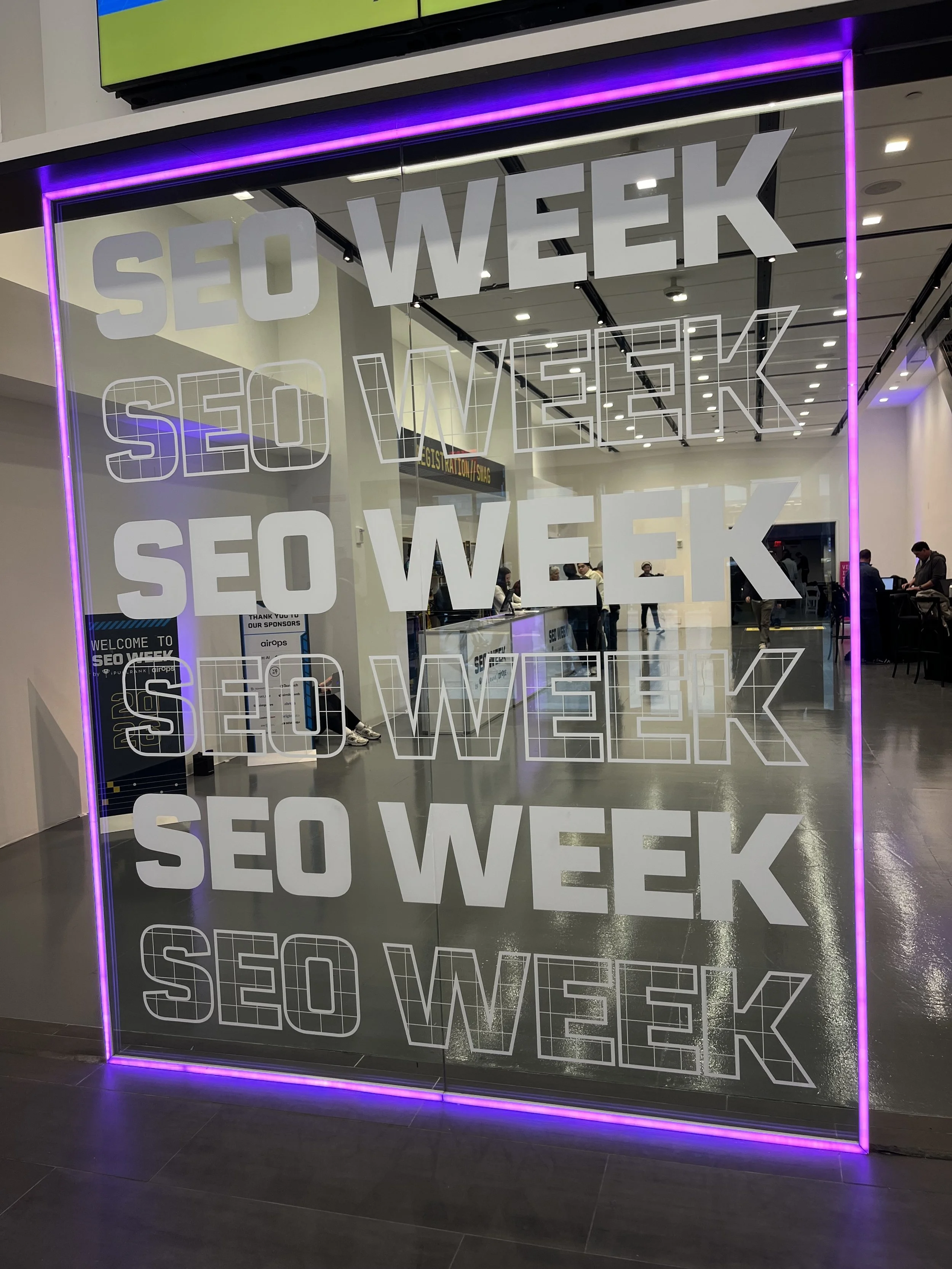
Welcome to SEO Week | April 27th to 30th I New York City
One of the best thoughts I heard on Day 2 of SEO Week came from John Doherty, who said: “Content marketing is not a production problem anymore. It’s a strategy and distribution problem.” That line makes sense to me because it captures the shift many brands are facing right now. AI has made it easier to create more content, build more assets, generate more variations and move faster than ever before. But that does not mean the content is necessarily useful, differentiated or connected to a business outcome. In fact, when production becomes easier, the real value moves to the thinking that happens before and after the content is made.
Doherty’s point came from a broader discussion about how AI changes the nature of marketing work. He talked about building tools and content assets that would once have required developers, designers or longer production timelines, and how AI has pulled the “real work” forward. In his words, AI can build the thing, but it cannot do the rest: getting people to use it, turning it into leads, building distribution systems or actually doing the marketing (at least not yet). That is the important distinction. AI can make content easier to produce, but it cannot make people care.
That also connects to the 10-80-10 framework he introduced. The first 10% is still the human part: setting the direction, asking the right questions, defining the audience and deciding what is actually worth making. The middle 80% is where AI can increasingly help with production, whether that means drafting, building, formatting, analyzing or assembling the work. But the final 10% is human again: applying judgment, refining the work, getting it into market and making sure it connects with the audience. That is why “strategy and distribution” are becoming more important, not less. The middle of the process may move faster, but the human bookends matter more.
Amanda Milligan’s session added to these points. She talked about how the old advice to “create quality content” has become too vague to be useful. For years, quality content was the thing brands aspired to. Now, in an environment shaped by AI, LLMs, YouTube, TikTok and what she called “Search Everywhere Optimization,” quality is the baseline. It is the bare minimum required to stand a chance to be discovered. That raises the bar for brands because content now has to do more than rank. It has to be useful, credible, differentiated and capable of performing across multiple discovery environments.
Ian Lurie pushed this idea further by arguing that the best content teaches. His examples, from Michelin to DigitalOcean to Silca, showed how useful, ungated, expert-led content can build trust and shape demand over time. His point was that search engines, AI systems and people are all trying to identify trust signals, and that “teaching builds trust.” That is a useful frame of reference because it moves content away from the idea of filling an editorial calendar and toward something much more valuable: helping people understand something, solve a problem or make a better decision (there’s arguably nothing new in this concept).
Garrett Sussman’s session made the distribution challenge feel even more complex. He argued that search is moving “from query to person,” with AI Mode and personal intelligence creating results that may be shaped by user context, preferences, history and connected data. One of his points was that “not everyone’s seeing the same query fan-out.” That means brands cannot only optimize for generic keywords or generic audiences. They need to understand the different audience contexts, needs and journeys that determine how people discover information.
Bianca Anderson’s talk was a reminder that content strategy also has to work inside the realities of the business it’s supporting. Her example of working with internal legal teams on competitor comparison content showed that blockers do not always have to kill good work. By sitting with legal early and asking what they were worried about, she turned legal concerns into brief constraints, which led to more objective language, a cleaner content format and a program that performed. That feels especially relevant for regulated categories I typically work in like finance, healthcare and insurance, where the best content strategy is not the one that ignores risk. It is the one that builds smarter work around it.
Alex Halliday’s session also helped move the conversation beyond the simplistic question of whether AI content is good or bad. His point was that there are two failure modes: the “content factory,” where an LLM is pointed at a CMS and low-value pages are pushed out at scale, and the opposite reaction, where all AI-assisted content work is treated as one “big bad blob.” The better question is whether the content adds genuine value, contributes useful information to the user journey and helps AI systems provide better answers to customers.
For brands, the message from Day 2 was: the AI era is not removing the need for content strategy. It is exposing where strategy was missing in the first place. If production is easier, then volume is no longer the advantage. The advantage is knowing what a brand should be known for, where it needs to show up, what evidence it can credibly own, how its content should be structured for people and AI systems, and how that content moves through the market.
Most brands do not need more disconnected content. They need a clearer strategy behind the content: the editorial narrative, SEO and GEO structure, distribution plan and measurement framework that connect content to visibility, trust and growth. In an AI-driven search world, the brands that win will not be the ones that publish the most. They will be the ones with the clearest point of view, the strongest understanding of their audience and the smartest plan for making their content matter.
SEO Week is iPullRank’s flagship search conference in New York City, bringing together senior SEO professionals, marketers, technologists and business leaders to explore how AI, search, content strategy and information retrieval are changing the way brands are discovered and evaluated online. The 2026 event runs April 27–30 in NYC, with four days of programming focused on modern search and AI-driven discovery.