

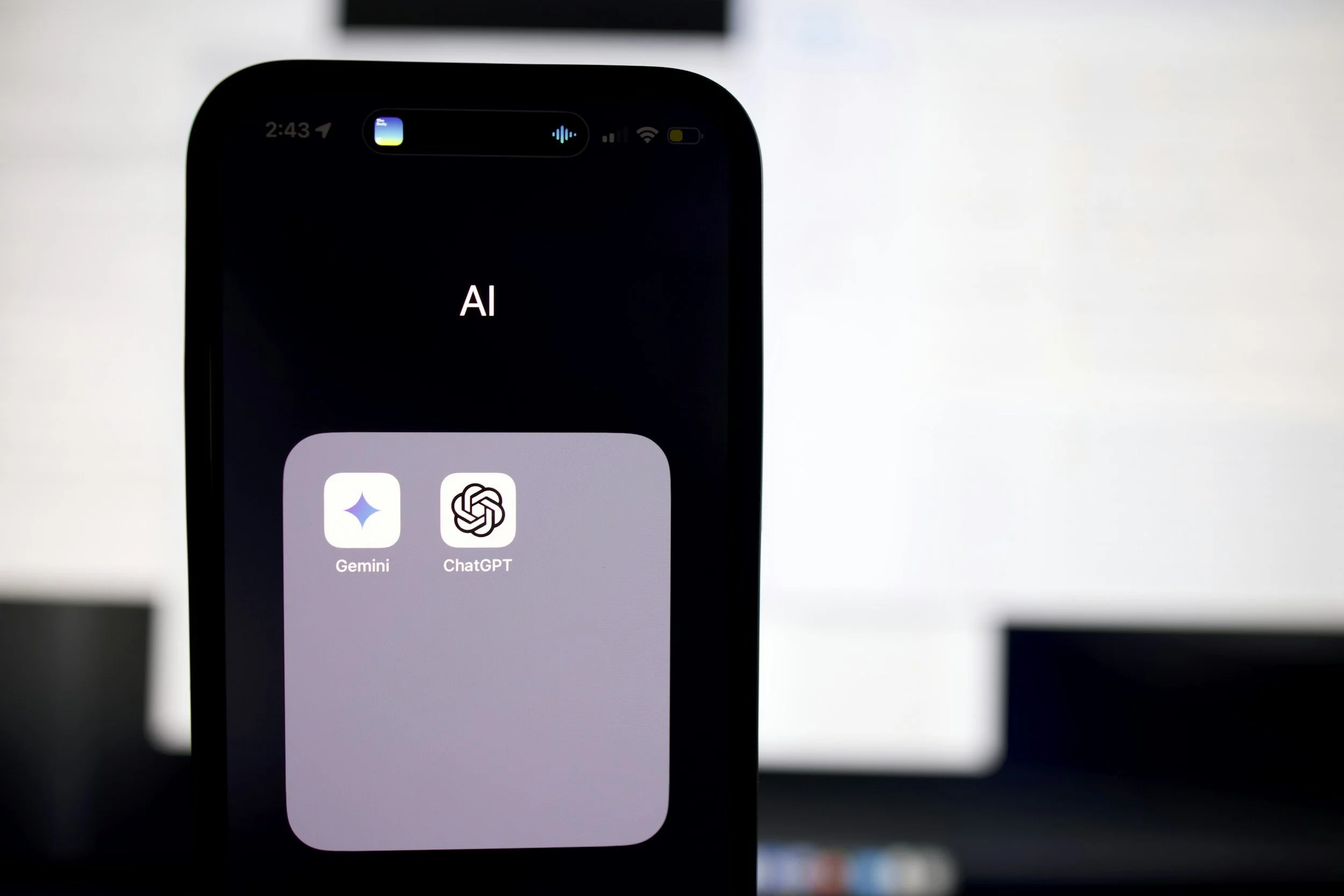
Popular Generative AI tools like ChatGPT are having a major impact on the workplace - but not necessarily in ways that were initially expected to.
There’s a lot of discussion in my circles around the possibilities that generative AI offers for content marketing. The initial buzz was all about how it could create original written content and images after entering a few key instructions (or prompts, as they are officially known). We quickly realized that the output simply wasn’t up to scratch.
A few media owners, after initially testing AI content, quickly backtracked and pulled it down. It’s clear that generative AI simply isn’t up to the job of creating original, unique content. What it generates is bland, undifferentiated copy filled with unnecessary superlatives. Let’s be honest here—the web doesn’t need any more of that type of content; there’s way too much of it already.
There are other reasons why AI is not being widely adopted, ranging from the philosophical or ethical (e.g., "it’s going to take our jobs!") to the functional (e.g., "Google won’t rank the content"). The latter is not technically true, as Google hasn’t outright condemned AI-generated content (how could it? It has its own Gen AI offering!). However, Google did update its E-A-T principle by adding an additional "E" for experience. This was interpreted to mean the experience of the individual writing the content. Clearly, AI cannot have first-hand experience doing the things it writes about, so human-created copy will always have an advantage.
By this point, I assume you’ve also tried creating images with various AI image generators—and probably didn’t have much luck. I’ve experimented with them and got a half-decent result for my personal SoundCloud page. However, I can’t see major brands using them. I did find one example of a brand (one I’d never heard of) using AI to generate images for their blog, with not-so-great results. They looked like some dystopian vision of what swimming lessons might look like in the age of Cyberdyne Systems. I’d expect my lessons to be given by a T-800! I just can’t imagine the clients reviewing the images and thinking, “Right, we nailed it this time.” But I guess we all have different tastes. I suspected they used AI to create the articles as well, so I checked—and they did. Well, at least in part. It looks like a human did a top edit.
This brings me to my point about AI. I don’t want to give the impression that I’m completely against using AI in a work setting—I’m not. On its own, it isn’t going to churn out great copy at scale and speed. However, it’s excellent at supplementing the work that humans do. Personally, I use it all day, running 20 to 30 prompts per day. I find it really helpful to get projects moving. For example, with this article, I entered a few prompts to get suggestions on what to include. The output wasn’t particularly helpful—the ideas were dry and uninspiring, and the tone wasn’t quite what I wanted. But it got me started.
The takeaway is that generative AI is great for supplementing human work, not replacing it. It’s a tool we all need to use, and use daily. I can say with certainty that if you’re not using it, your competitors are—and that’s making them faster and more efficient. Here are a few examples of where generative AI can be useful:
- Initial research
- Outlines for articles
- Research (though you need to validate it, as it has a tendency to hallucinate)
- Top editing
- Copy editing
- Proofreading
- Auditing existing content and making recommendations for updates
- Writing H1 & H2s from new copy
One final thought: It won’t be the AI that takes your job away—it’ll be your competitor who has figured out how to use it in their workflow. If you need help with integrating generative AI into your workflow processes please hit me up. I’d love to share my experience and help you.
2. https://blog.hubspot.com/marketing/ai-generated-content-seo
3. https://instaswimusa.com/blog/
4. https://www.ibm.com/topics/ai-hallucinations